Guidance When State Lines Complicate Custody
Interstate custody battles are not just legal disputes. They affect where your child lives, who makes decisions for them, and how often you see them. The stakes are personal, immediate, and long-lasting.
If you are facing an interstate child custody issue in Arlington, Southlake, or Mansfield, TX, this is the moment to act decisively. Getting legal guidance early can prevent costly jurisdiction mistakes and protect your parental rights before problems escalate.
Show up for your child. Show up for their future.
“We contacted Harris Cook requesting counseling in regards to a child custody case. David was very compassionate with our current situation but was also very proactive in looking ahead and advising us in a direction that would be best for our family. David was so confident and professional through all of the ups & downs. We knew we were in great hands and we feel so blessed to have achieved the outcome that David and his staff worked so hard for.”
—Michelle, 5-Star Review
In most child custody cases, the parents and children all live in the same state. However, this is not always the case. Sometimes children are born to unmarried parents who do not share the same state of residence. In other cases, a parent may want to move out of state after a divorce.
While every family's circumstances are unique, multiple state residencies generally add a layer of complexity to child custody. Interstate custody is a specific area of family law that aims to resolve these custody issues.
While it is possible to represent yourself in family legal matters, it is not recommended, especially for interstate child custody. Make the process easier on yourself and your family by working with a family law attorney in Arlington, TX.
Our attorneys have dedicated their careers to helping clients with complex family law litigation, including divorce and child custody cases.
David Cook, John Clark, and our team of legal professionals understand how stressful these matters can be. We strive to reduce that burden and help you achieve a manageable resolution. If you are looking to file for child custody, please contact us.
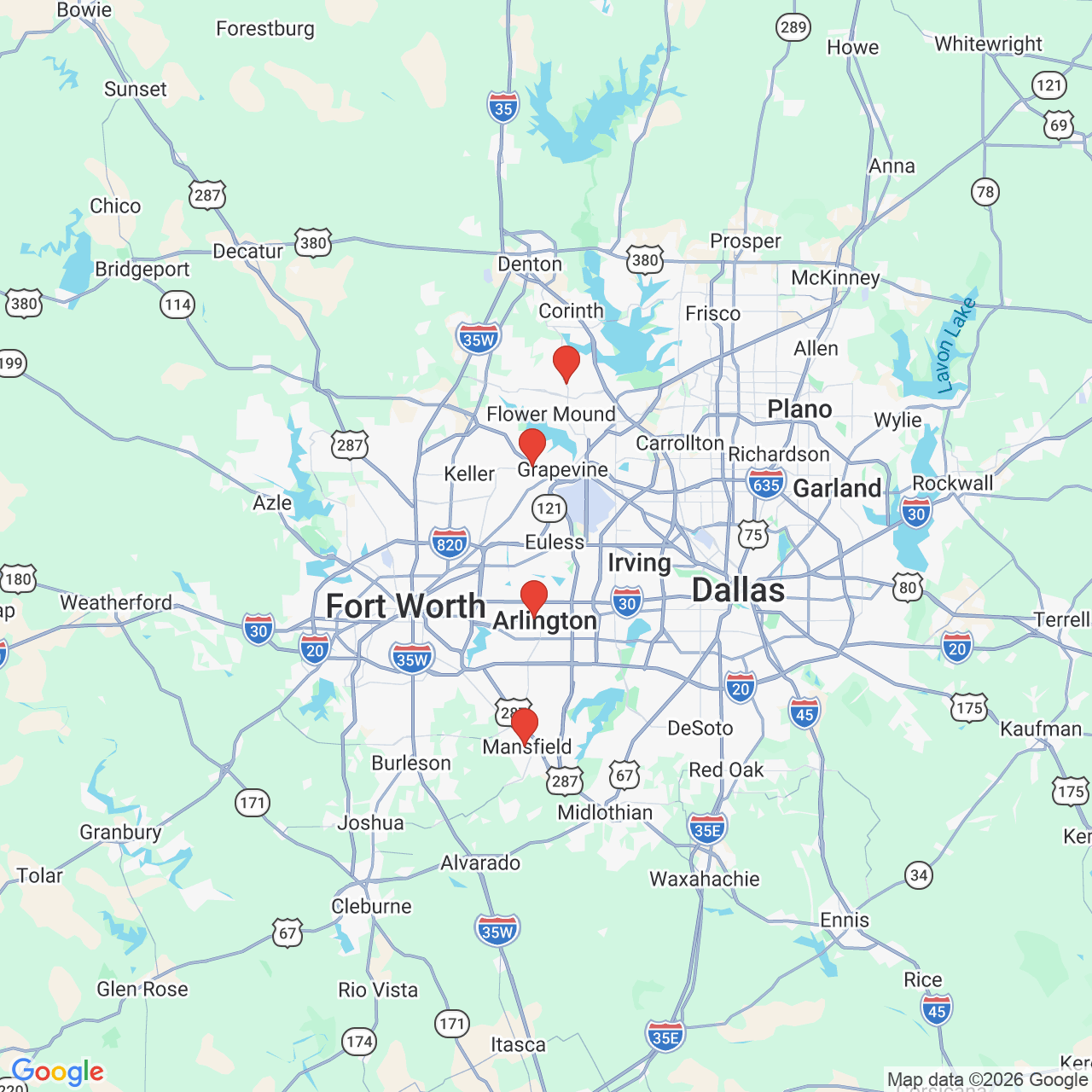
Our family law practice is centrally located between Dallas and Fort Worth, TX, serving clients at the heart of the metroplex. Find out how we can help you by scheduling a consultation at our law offices in Arlington or Southlake. You can reach us online or by calling:
“Although navigating the process of my divorce after almost 20 years of marriage and the impact it had on my children was so difficult and hard to see them hurt, having the legal expertise and counsel of David and his team made what was such a scary and painful process one that I felt so very well represented in. Most of all, I felt confident of his professional and compassionate counsel and representation in seeking the very best way to lead my children and I through this process.” – Katie, 5-Star Review
To simplify interstate child custody matters, the majority of the country (all states except for Massachusetts) abides by the Uniform Child Custody Jurisdiction and Enforcement Act (UCCJEA). These uniform regulations help determine which state has jurisdiction over your child custody case.
If you are looking to file or have already been through a divorce, you likely know that state laws can play an important role in the outcome. The same applies to child custody. Each state has slightly different legislation, which can impact your share of custody, visitation rights, and child support.
One of the intentions of the UCCJEA is to prevent parents from moving out of state in an attempt to relitigate a custody order. If the parents lived in the same state when the divorce or initial custody action was filed, that state will continue to exercise jurisdiction over the case. The state maintains jurisdiction until neither the child nor parents reside there or have a significant connection to the state.
A child custody case can only be heard in a court of the child’s “home state.” If parents do not reside in the same state at the time of filing a custody case, the UCCJEA will help determine the appropriate location. When making this finding, the court will consider factors such as:
The court will look at whether there is any state that can satisfy the above requirements, and if so, will find that state to be the home state for purposes of your custody and/or visitation issues.
While the UCCJEA provides a framework to determine the state of jurisdiction, this question gets more confusing when parents and children have lived in multiple states. To avoid wasting time and money filing for child custody in the wrong state, you should speak to a qualified family lawyer. We can take a look at your case and help guide you through the proper legal proceedings.
While parents are free to move without restriction, Texas law prevents the relocation of a child. Typically, a parent with primary custody can move as far as a county adjacent to the one where they received their initial determination. Beyond that, you will need the permission of the court.
In most cases, the court does not allow the relocation of a child if the move will affect the other parent's right to custody or visitation. Exceptions can be made to the Texas child custody relocation laws if the move is in the child's best interests, for example, access to better medical care or education in the other state. However, this is a matter the court takes very seriously and does not grant lightly.
If you believe you have a valid reason for moving out of state with custody of your child, it is important to follow all the appropriate legal steps. Failure to do so can result in fines, criminal charges, and even jail time. The legal process usually begins with mediation:
"In most cases, the court does not allow the relocation of a child if the move will affect the other parent's right to custody or visitation."
We assist clients in the Greater Southlake, Mansfield, and Arlington, TX, areas with these types of serious custody modifications. Whether you want to petition a case for moving out of state or object to the relocation of your child, our attorneys can fight for your custodial rights. We are advocates for both parents' and children's best interests and want to help you reach a fair solution.
To ensure the Texas courts enforce your out-of-state custody order, you must officially file for registration. This not only protects the initial determination but also gives both parents peace of mind when sharing custody across state lines. The same applies if you received your initial determination in Texas and want the order recognized in another state.
Registration in a different state does not transfer the jurisdiction. It simply gives the state court the information it needs to take action in the event the terms of your order are violated. If you have an out-of-state child custody order that you want to enforce in the state of Texas, contact our Arlington attorneys for help with proper registration.
If you are confused by any of these interstate child custody laws or court proceedings, you are not alone. Sharing custody across state lines is no simple matter. When you and your child's other parent live in different states, you need the help of a child custody attorney.
David Cook, John Clark, and the rest of our team are qualified to handle these complicated situations. We will answer your questions, explain your options, and ensure your custodial rights are protected. We serve clients throughout the Dallas and Fort Worth area, including Arlington, Southlake, and Mansfield.
If your child is moved to another state without your permission, you should notify law enforcement officers and contact our Arlington firm to learn more about your legal options. Depending on the circumstances, the parent responsible could face several criminal charges. At the very least, the action is in violation of your custody order. You are well within your rights to request post-judgment modification to your existing custody arrangement if needed to protect your child.
Sometimes a child custody case is necessary when one or both of the parents are struggling with a mental illness. We can bring in mental health professionals to offer advice and guide the process toward a successful outcome.
We've worked with mental health professionals in many interstate custody cases, including one where the child's grandmother was granted custody from the child's mother, who had bipolar disorder and was unmedicated.
Harris Cook, LLP delivers strategic family law representation across Tarrant County. Our attorneys handle high-asset divorce, property division, custody, adoption, and more.
Our firm is proud to include attorneys affiliated with:
Texas Bar College
Tarrant County Bar Association
Texas Academy of Family Law Specialists
Arlington Bar Association
Request a virtual consultation or call (817) 275-8765 to get started today.
Locations
We have 4 locations the greater DFW Metroplex